
How the pandemic forced us to create habits that benefit the Earth
Some of our behaviors have benefited the environment, like buying locally, reducing our commutes and flying less. Other habits have reduced our odds of catching other illnesses. But retaining those habits is easier said than done.
The likelihood of internalizing a habit largely depends on how unique it is compared to other habits we have, said Art Markman, professor in the department of psychology at the University of Texas at Austin.
It can be relatively easy to form a new habit if nothing competes with it, he said, such as learning how to drive to work in a new town. It becomes harder if other habits compete with it, he said, like eating healthy when your spouse enjoys baking a lot.
“You already have lots of memories about what you do in your kitchen and dining room, so all of those other memories are competing with the new habit you’re trying to create,” Markman said.
The key to transferring habits to a post-pandemic world is to anticipate potential obstacles, he added.
Markman noted that some people have used the time that would have otherwise been spent on their daily commute to exercise. If they go back to work in person and that time is taken away, they could find a gym near their work to continue the healthy habit, he said.
Many people traveled less by plane or car, which positively affected the environment, said Sabina Shaikh, director of the University of Chicago’s Program on Global Environment.
When people drive less, “there is more space and safety for biking and walking,” she said.
As old and new habits collide with the slow re-opening of the world, here are some habits to keep long after the pandemic ends.
Purchase your produce locally
When the world went into lockdown, many people turned to outdoor farmers markets and other small businesses to buy much-needed produce, according to the US Small Business Administration.
Decrease your commute to work
When the pandemic shuttered many in-person offices, people quickly hopped online to continue working virtually.
Markman said he’s seen more people walk to nearby stores in his area in addition to commuting less due to the pandemic, which he says is another benefit to the environment.

Working from home a couple days per week could reduce carbon dioxide emissions.
Reduce airplane travel
We’re not saying you shouldn’t jump on a plane one day soon to visit Grandma, but some business trips could be replaced by video conference calls.
Air quality improved around the world under pandemic restrictions, Shaikh said, which was “due in large part to the reduction in travel.” However, air quality is slowly beginning to worsen as places have opened back up, she added.
Spend time with loved ones at dinner
When the pandemic first began, it became significantly harder, or in some cases impossible, to see loved ones in person. Families who lived in the same household spent time together and often participated in activities like bread-baking and puzzle-building.
Working from home also gave families the opportunity to enjoy dinners together.

Spend time in nature
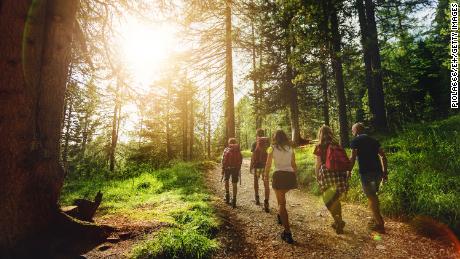
Many of us ran for the hills — in some cases, literally — when Covid-19 infiltrated our cities and towns.
Wear a mask when sick
