
Emergency room visits for kids are down during the pandemic. But that’s not entirely good news
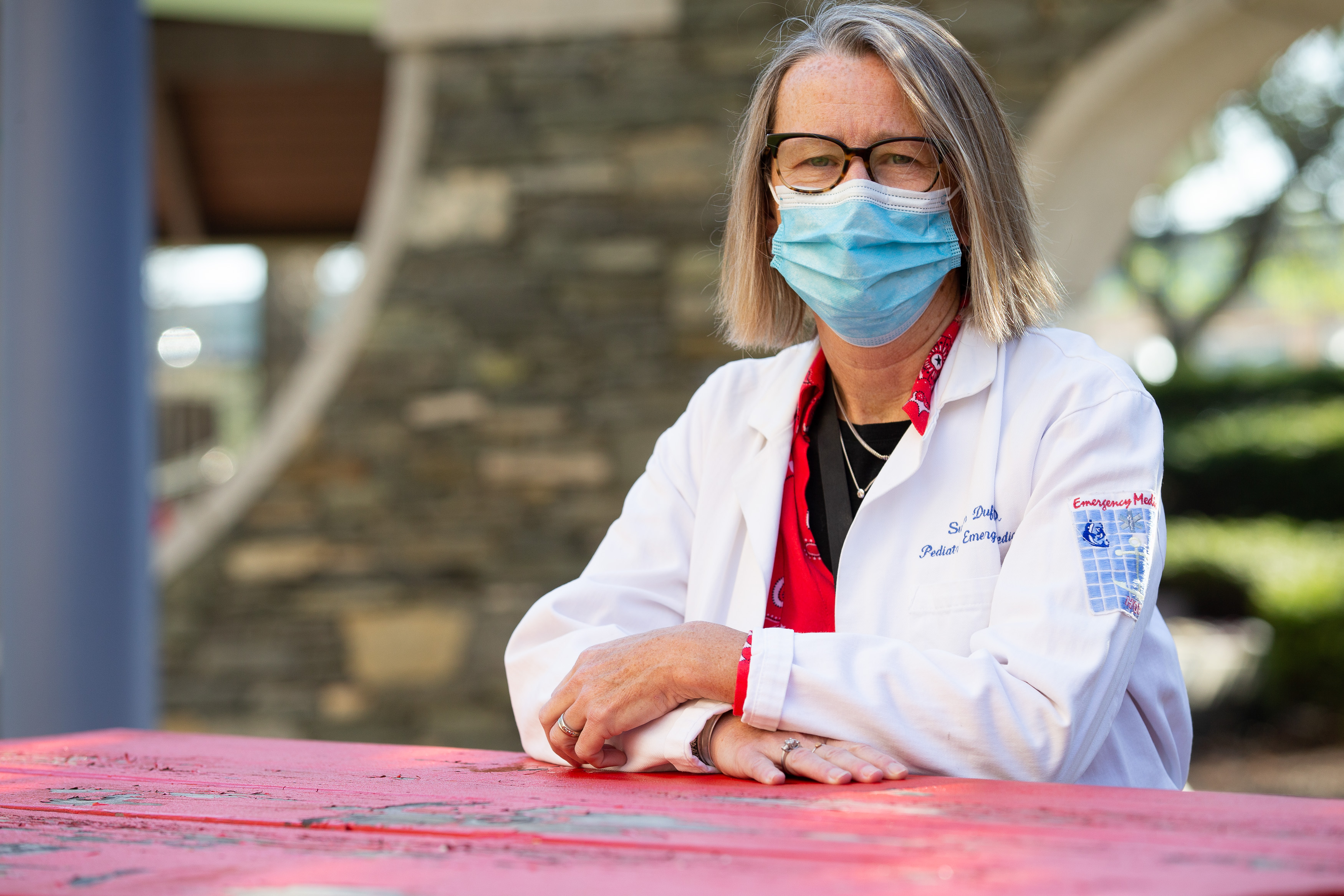
The halls of Hasbro’s emergency department in Providence were, relatively speaking, quiet. And though volumes have picked up some since then, they’ve stayed low even a year later — about 70 percent of normal, Duffy said.
“What is going on with children right now?” Duffy has wondered.
A lot, and very little, all at once.
Since the pandemic began, kids have had fewer opportunities to hurt themselves while climbing trees, playing sports, or running around during playdates or on playgrounds, according to doctors who care for children. Nobody’s blowing out candles at birthday bashes, and certainly no one is eating the cake after.
It’s not that doctors like Duffy want any children to get hurt or sick. But painful as they might be, these sorts of injuries are the results of the quintessential activities of childhood, with its exploration and experimentation. The fact that kids are not having those experiences is a big problem. And the side effects of this inactivity have been profound: The one specialty where doctors report significantly higher volumes among children is psychiatric.
It has consequences for pediatricians, too, who have had to scramble to survive financially. Some have taken sabbaticals. Others, like Duffy, ended up working in the COVID-19 field hospitals in Rhode Island, caring for adults for the first time in their careers. But even in the cavernous hall of the Rhode Island Convention Center in Providence, leaning over the beds of people who were much older than her usual patients, she couldn’t help thinking about all the kids they were no longer seeing, and why.
“In your development, in your growth, to become a happy, healthy adult, it all begins in childhood,” Duffy said. “All those sad, sick adults were once cute kids. It’s a critical point of life.”
The observations of doctors like Duffy and other pediatricians are reflected in state data.
According to the Department of Health in Rhode Island, there were 57,577 pediatric emergency department visits in the first nine months of 2019. That dipped to 37,318 in the first nine months of 2020, a 35 percent decrease. Visits were down among all age groups for those under 18, for both injury-related and non-injury related visits.
What might otherwise be considered good news, though, betrays a darker reality: Children have experienced profound isolation and inactivity over the last year.
“I do think for the most part, kids are pretty resilient,” said Dr. Gregory Fox, the president of the Rhode Island chapter of the American Academy of Pediatrics. “But this has been going on for a long time. They want to be kids.”
Fox quickly rattled off the health concerns at play in the pandemic: unreported child abuse, lower childhood vaccination rates, the lack of routine care and well child visits, unhealthy weight gain.
Fox is a pediatric endocrinologist. When he first started out in his field, he was told that type 2 diabetes basically doesn’t happen in children. That has changed in the years since. It could get worse.
“We worry that one of the consequences of this pandemic is that we’re going to start seeing it younger,” Fox said. “We’re trying to lay the groundwork for a healthy life, beyond pediatrics. We’re just unfortunately feeling like we’re not sending kids off into the world in the shape we want to. That’s really hard.”
Fox has seen the effects of the pandemic on kids as a pediatrician and as a parent: His son, Joe, was a high school senior in 2020. No prom. No graduation. Sports awards via Zoom.
“I hope that 20, 30 years from now, they’ll look back at this and have a bonding moment over how bad 2020 was for them,” Fox said.
Joe, now 19, is a student at Worcester Polytechnic Institute. He said in a phone interview that he’s trying to take things in stride.
“That’s what I’ve been trying to do at least,” he said. “Making the best out of it. It could always be worse — not much worse, but it could always be worse.”
On the fourth floor of a gleaming medical office tower in East Providence, on MLB’s Opening Day, a group of high school baseball players was marking something a little different: leg day.
They were there as part of a program run by Dr. Peter Kriz, a sports medicine physician at University Orthopedics. It’s a strength and conditioning program focusing on young baseball players — a sport that tends to draw from a more diverse player pool than others, like lacrosse — that’s been running for three years. It’s been a little different in the last year through the pandemic. The boys, mostly around 16 years old, have kept in shape for a delayed and shortened baseball season. On April 1, they stretched, did leg exercises, raced each other past cones.
Kriz worries that if kids start up playing sports again suddenly after such a long time off, they could hurt themselves. They may have lost hip strength or stabilizers in their knees. Injuries are down among kids overall, but doctors like Kriz have seen injuries among young athletes who aren’t ready to race right back into full-speed sports.
“They’re heading back into their seasons, and most of us are worried about their level of conditioning and preparation,” Kriz said. “We all have been a little concerned about whether we’re going to see more serious injuries in football.”
Jared Muñoz, 16, plays center field for Bishop Hendricken. He dreams of playing in the MLB some day. But over the hard lockdowns of last spring, he couldn’t find anywhere to play ball or exercise. He and other players would be chased off fields. He missed the camaraderie of bus rides with the team, music blaring. And he felt himself losing his strength.
“It was pretty rough,” he said.
He is getting that strength back, and then some, he said, panting and sweating through a mask after a few cone races during a recent session of Kriz’s program. But programs like that are the exception, not the rule. And the rule is not far away.
Less than a mile from University Orthopedics’ Riverside location is Bradley Hospital, a brick-faced psychiatric hospital for children and adolescents. Over the past year, they have busy.
“Bradley has certainly been on the front lines of what we’re calling the mental health wave,” Margaret Paccione, the director of clinical innovation at Bradley, said in an interview. “It came after the COVID wave.”
Rhode Island is still in the midst of that mental health wave, Paccione said. There have been reports of increases in suicidal thoughts and self-injury. Older kids are unable to socialize in an era of social distancing. Schools have often had to go remote and sports have been intermittently canceled. Younger kids have trouble getting through the whole day without being able to read facial expressions when everyone is wearing masks. For an entire school year, many school-age kids have never been to school, at least in a traditional sense.
“Kids are just feeling cut off from their friends, from Grandma, from sports programs, music programs,” Paccione said. “That level of isolation has been really really rough. Rough on these kids.”
And yet Paccione sees some signs of hope — especially with schools reopening.
“I put that alongside kids whose faces absolutely light up when they’re able to go back to school, even part-time,” she said. “Kids are reporting that, ‘Oh my gosh, I saw my friends. I was able to go back to school.’”
Dr. Erika Constantine is a Rhode Island-based pediatric emergency physician who lives in North Attleboro, Massachusetts. She has three kids — Ashton, 14, Neve, 12, and Leia, 11 — who are bright, funny, and a little fed up with all this Zoom. At times during the pandemic, they’ve had to be on video for six hours a day.
“Adults can’t even do that,” Constantine said in an interview with the Globe, over Zoom.
Constantine said the stress of that and other pandemic concerns has had an effect on her kids, who haven’t been able to do the things they love or would love if they got to try it. Sleepovers? Nope. Hockey? Curtailed. Seeing their relatives in Canada? Out of the question.
“I find it a little bit depressing, because you can’t do anything,” Leia said. “You’re stuck inside, you can’t do much.”
What has she been able to do?
“Basically FaceTiming my friends and playing Roblox,” Leia said.
Ashton recalls in the early days of school reopening when the administrators told them they couldn’t speak during lunch. Some schools adopted the rule to stop the spread of respiratory particles. The rule was pretty quickly rescinded at Ashton’s school, but even afterward, the kids still didn’t talk. Ashton sees that as a warning sign about the future. People are like strangers to each other now and it can feel like striking up a conversation is as harrowing as asking someone on a date, Ashton said.
With their mom a pediatrician, they spend a lot of time talking about this stuff, and none of it comes as a surprise to Constantine.
“The pandemic has allowed us to spend a lot more time at the dinner table, talking about all this stuff, because we’re not running to hockey and we’re not running to tennis,” Constantine said.
“I wish we were, though,” Neve interjected.
“You’ve gotta take the good with the bad,” Constantine said.
Brian Amaral can be reached at [email protected]. Follow him on Twitter @bamaral44.
